Burrs, sharp edges, scale, embedded residue and inconsistent appearance can make an otherwise accurate component fail assembly or inspection. You will be able to match the finishing operation to the defect, specify a repeatable process, measure the improvement and recognise when another method is safer.
Key takeaways
- Keep enough media moving to prevent components from nesting.
- Match media shape, size and hardness to the component and defect.
- Set cycle time from measured surface results, not appearance alone.
- Inspect for scratches, residue, staining and dimensional change after finishing.
How contact between media and components changes the surface
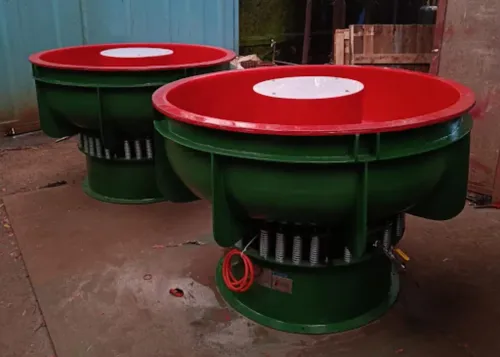
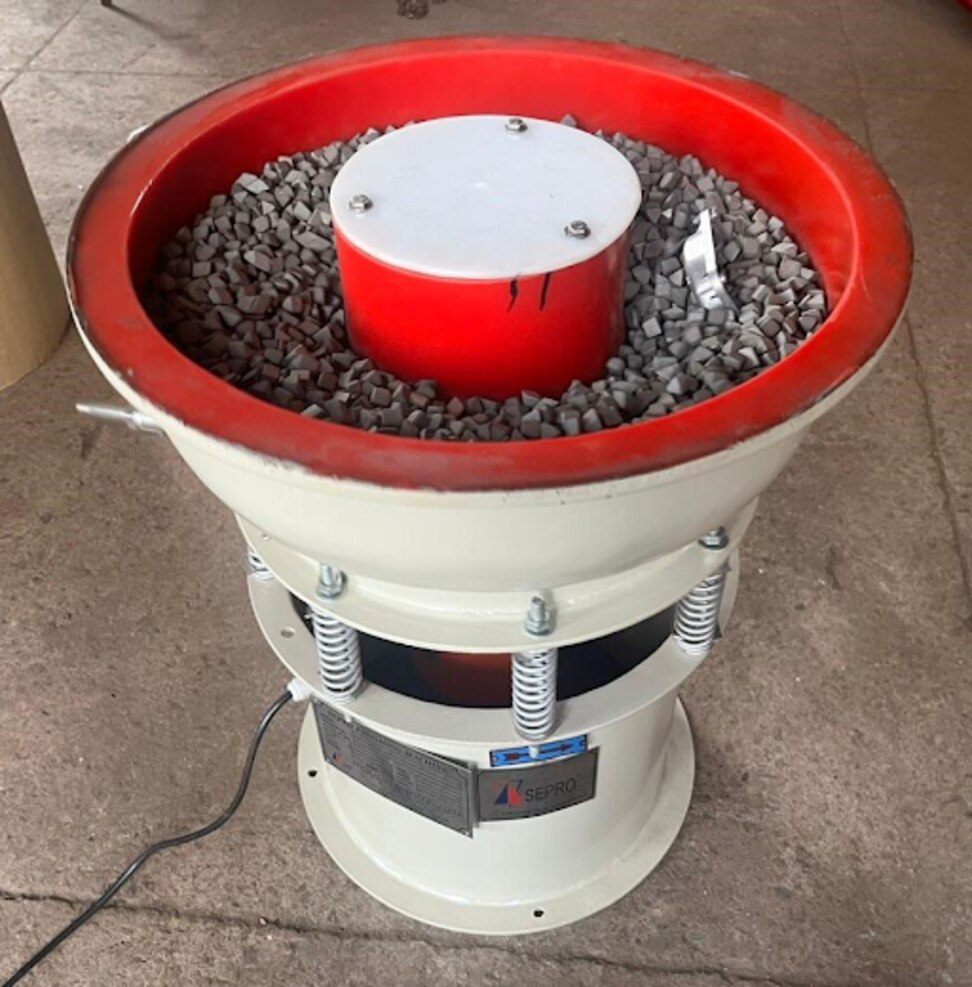
Load the chamber with components and enough media to keep the batch circulating rather than nesting. Add a compatible compound and water when the wet process requires them; the liquid carries fines, controls lubrication and corrosion, and helps prevent residue from settling back onto the parts.
1. Set the vibration and cycle time, then allow repeated relative motion between the components, media, liquid and chamber. Ceramic media cuts burrs, oxide scale and sharp high points quickly. Plastic media gives delicate edges and plated surfaces gentler contact, while steel or stainless-steel media mainly burnishes through low-cut rubbing.
Organic media supports drying or final polishing.
2. Use deburring to remove unwanted projections, then use edge radiusing to create a controlled edge break. These operations change edge geometry; they are not the same as polishing, which reduces visible fine marks after rougher defects have been removed.
3. Apply burnishing when you need a smoother, brighter surface with minimal stock removal. Use descaling to remove heat or oxide scale, and surface cleaning to remove oil, fines and compound residue. A coarse deburring cycle cannot replace fine smoothing: excessive cutting can deepen scratches and round edges that later polishing cannot fully restore.
4. Separate the media, rinse the components, dry them completely and apply corrosion protection when the material or storage conditions require it. Inspect holes, threads, recesses, edges and critical surfaces.
A glossy part can still contain a burr, trapped compound or embedded abrasive. Judge the result by cleanliness, edge condition and inspection measurements, not appearance alone.
How to choose media, compound and operating settings
A small media piece reaches narrow holes, threads, slots and recesses, but it can lodge in blind holes or cross-drilled passages. Larger media separates more easily and is less likely to become trapped, yet it may never contact an internal feature.
| Media | Main action | Best starting use |
|---|---|---|
| Ceramic media | Fast cutting | Robust steel castings and large burrs |
| Plastic media | Low-impact cutting | Fragile edges, plated surfaces and delicate parts |
| Steel media | Burnishing | Smoothing and brightening robust surfaces |
| Organic media | Drying or polishing | Final moisture removal or light polishing |
Choose the compound for the job: cutting, burnishing, rust removal, aluminium processing or final cleaning. Before processing aluminium, zinc or magnesium, verify the compound’s pH and alloy compatibility; steel chemistry can stain, darken or attack nonferrous parts.
Record compound concentration, water quality, flow and foam during every trial. Depleted or contaminated solution can stain parts and redeposit fines, while excessive foam cushions impacts and slows cutting.
Set the media-to-workpiece ratio and chamber fill so parts circulate rather than nest. Then tune batch size, vibration frequency or amplitude and cycle time; too much load restricts motion, while too little media increases part-on-part impact.
Run hardened steel, plated parts, precision threads and sealing faces as separate trial categories. Inspect blind passages and critical surfaces after each trial before increasing cutting action.
Which finishing process fits the component and its acceptance limit
Choose the process by matching contact intensity and access to the acceptance limit, not by targeting Ra alone. Vibratory finishing suits medium-to-high batch volumes and parts that tolerate repeated media contact, including many castings and machined components. A part can meet average Ra while retaining edge rounding, isolated scratches or lodged media.
| Process | Strength | Limitation and best fit |
|---|---|---|
| Vibratory finishing | Consistent batch deburring and finishing | Use for exposed surfaces and contact-tolerant castings or machined parts |
| Rotary barrel tumbling | Simple, economical processing for robust parts | Slower, less controlled access with more part-on-part contact |
| Centrifugal disc finishing | Faster action for smaller batches and compact parts | Requires careful loading and media separation |
| Manual deburring | Flexible for low-volume, one-off work | Results vary by operator and consume labour |
| Shot blasting | Rapid scale removal from exposed surfaces | Poor choice for fine burr control, threads or delicate finishes |
| Abrasive flow machining | Reaches selected internal passages | Higher cost; geometry must permit abrasive flow |
| Chemical or electrochemical finishing | Accesses complex surfaces without mechanical impact | Needs tight chemistry control, waste treatment and coating compatibility |
Before specifying equipment, check:
- Material and hardness, starting roughness, burr size and smallest hole
- Thread protection, critical tolerances, required Ra or Rz, edge-radius range and visual grade
- Batch size, noise limit, wastewater route, floor space and media-separation method
Reject vibratory finishing when abrasive contact risks a coating, tight dimensions, deep blind passages or entangled geometry. Choose a process that proves the required burr height, edge radius and cleanliness—not merely a finish photograph.
How to prove the machine improves quality and repeat the result
A promising sample becomes a production recipe only when a representative trial batch produces the same result repeatedly. Include the smallest holes, sharpest edges and most difficult recesses, then repeat the cycle on separate loads before release.
Record:
- Media material, shape, size and loading
- Part count and chamber fill
- Compound concentration and water flow
- Vibration setting and cycle time
Compare before-and-after photographs under fixed lighting. Measure burr height and edge radius, record surface roughness Ra or Rz in the same measurement direction, and check critical dimensions, threads and sealing surfaces.
ISO 21920 defines profile-texture terminology and measurement conventions; your release specification may also need a maximum burr height, edge-radius range, visual limit and trapped-media check.
Compare machines against the controls your recipe needs, not a finish photograph.
| Factor | What to compare | Why it matters |
|---|---|---|
| Working system | Chamber dimensions, usable capacity, motor power, frequency or amplitude | Determines circulation, contact and batch size |
| Construction | Lining material, drain and separation arrangement | Affects wear, cleaning and media recovery |
| Controls | Timer, dosing controls and repeatability | Holds the approved recipe steady |
| Maintenance | Cleaning access and replacement-part support | Limits downtime between batches |
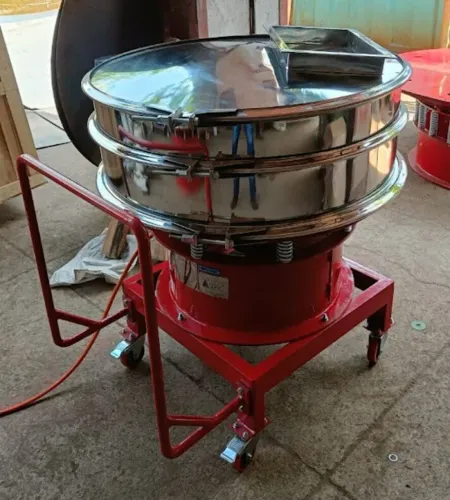
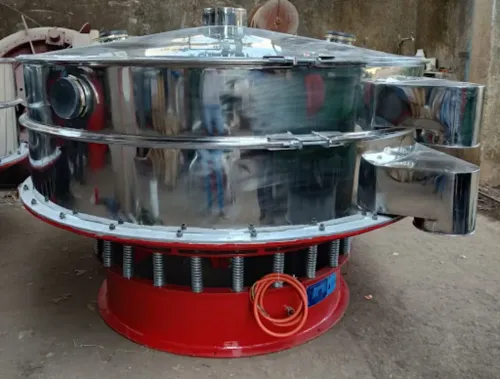
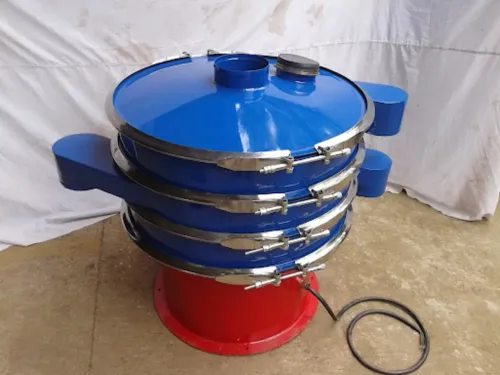
Separation Engineers (India) is most useful when it translates trial data into capacity, separation and control requirements. Select screens, magnetic separation or another method for the smallest media and most vulnerable features; trapped media in a thread or hole can cause assembly failure even when Ra passes.
Related products
 | Vibro Energy Separator Metal Surface Finishing Machine The Metal Surface Finishing Machine by Separation Engineers India is designed to deliver precision finishing and superior surface quality for... View product → |
Vibratory Finishing Machines The Industrial Tumbling Machine by Separation Engineers India is a high-performance solution designed for efficient vibratory finishing, deburring,... View product → |
How to prevent common defects after finishing
Prevent defects by controlling contact, separation and cleanup rather than judging the batch by shine. Burrs left in recesses indicate media that is too large, weak circulation or insufficient exposure; reduce media size only after confirming that it will not lodge. Excessive edge rounding indicates excessive abrasive action or cycle time.
1. Check the load before extending the cycle. Scratches point to contaminated or worn media. Part nesting causes uneven exposure and part-on-part marks, so separate components by material, size and sensitivity when mixed loads circulate poorly or damage one another.
2. Treat media separation as a quality-control step. Use screens, magnetic separation or another separator sized for the smallest media and the most vulnerable hole, thread, undercut or cavity. A trapped piece can block assembly or become a field failure.
3. Rinse parts immediately and dry them completely. Residual compound causes staining and discolouration; moisture causes flash rust. Keep carbon-steel media and shared steel contact surfaces away from stainless parts when free-iron contamination matters; use segregated equipment or stainless or nonferrous media.
4. Inspect cleanliness, embedded abrasive, burr height, edge radius, critical dimensions and trapped media, not appearance alone. Vibratory finishing does not control flatness or tight tolerances, and a passing Ra value can hide scratches or excessive edge break.
Plan for wastewater, sludge, cleaning chemicals, handling, maintenance and production stoppages. Guard the chamber, isolate vibration, apply noise control, manage mist or dust, provide lockout procedures, and require chemical-resistant gloves and eye protection.
Frequently asked questions
How does contact between media and components change the surface?
Moving media applies repeated impact, rubbing and sliding to remove burrs, edges, oxidation and roughness. Contact intensity depends on media size, shape, hardness, fill level, speed and the component’s position in the load.
How do you choose media, compound and operating settings?
Choose media that reaches the required edges without lodging in holes, then match its hardness and shape to the material and defect. Select a wet-process compound for cleaning, lubrication, corrosion control or burnishing, and record water level, fill ratio, speed and cycle time.
Which finishing process fits a component’s acceptance limit?
Use vibratory deburring for edge removal, burnishing for smoother surfaces, tumbling for simple robust parts, and centrifugal finishing for faster, more intensive action on smaller components. Compare each process with the acceptance limit for roughness, burr height, edge radius, appearance and dimensions.
How can you prove the machine improves quality and repeat the result?
Record the initial and finished condition, including Ra or Rz roughness, burr measurements, critical dimensions, photographs and defect counts. Fix the media, compound, load, speed, water level and cycle time in a controlled process sheet, then recheck samples from each batch.
How do you prevent common defects after finishing?
Prevent scratches by separating incompatible parts and removing sharp contamination, prevent media lodging by selecting the correct size and shape, and prevent stains or residue with suitable compound concentration, rinsing and drying. Inspect parts immediately after separation.
Related products
Vibratory Finishing Machines Vibratory Deburring/Finishing Machine The Vibratory Deburring/Finishing Machine by Separation Engineers India is a high-performance surface finishing solution designed for precision... View product → |
Vibratory Finishing Machines The Vibratory Finishing Machine by Separation Engineers India is a high-performance surface finishing solution designed for efficient deburring,... View product → |
Vibratory Finishing Machines The Vibratory Deburring Machine by Separation Engineers India is a high-performance solution designed for precision deburring, edge radiusing,... View product → |
 | Vibratory Finishing Machines The Tumbler Finishing Machine by Separation Engineers India is designed to provide precise and efficient surface finishing for components processed... View product → |