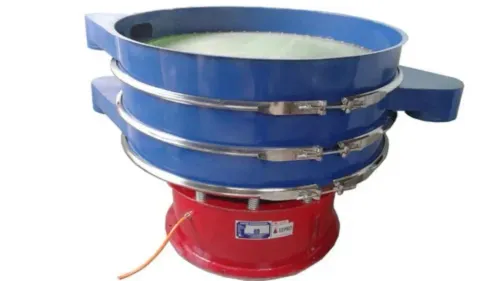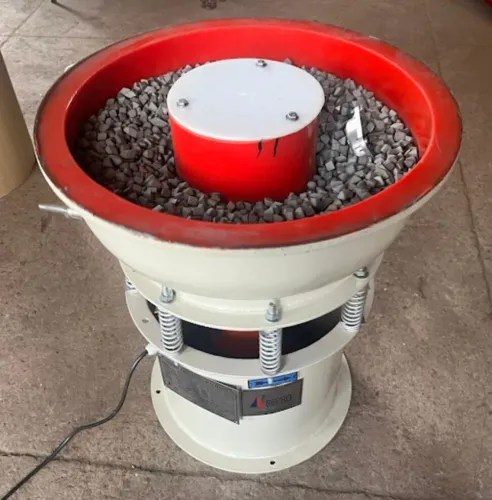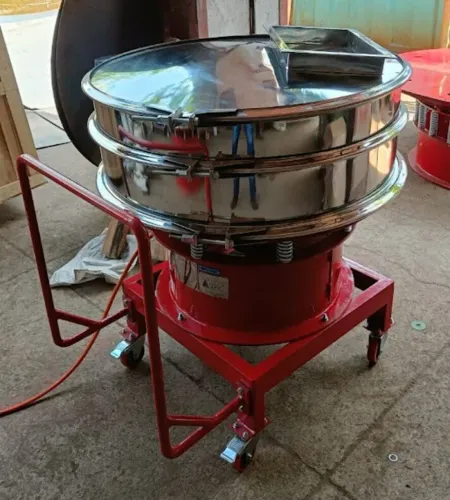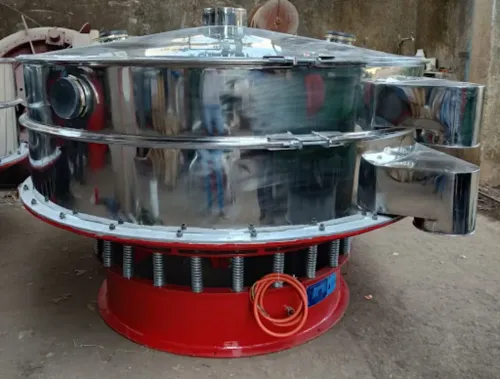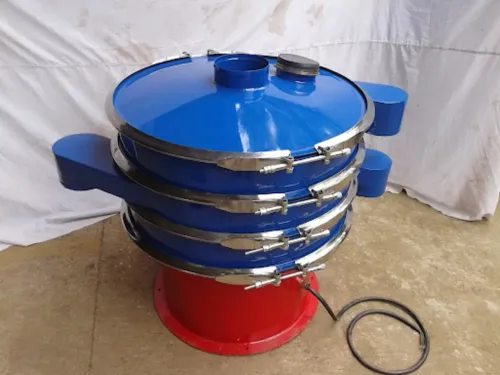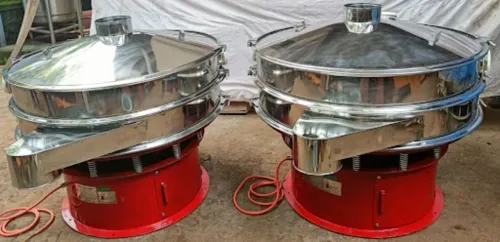
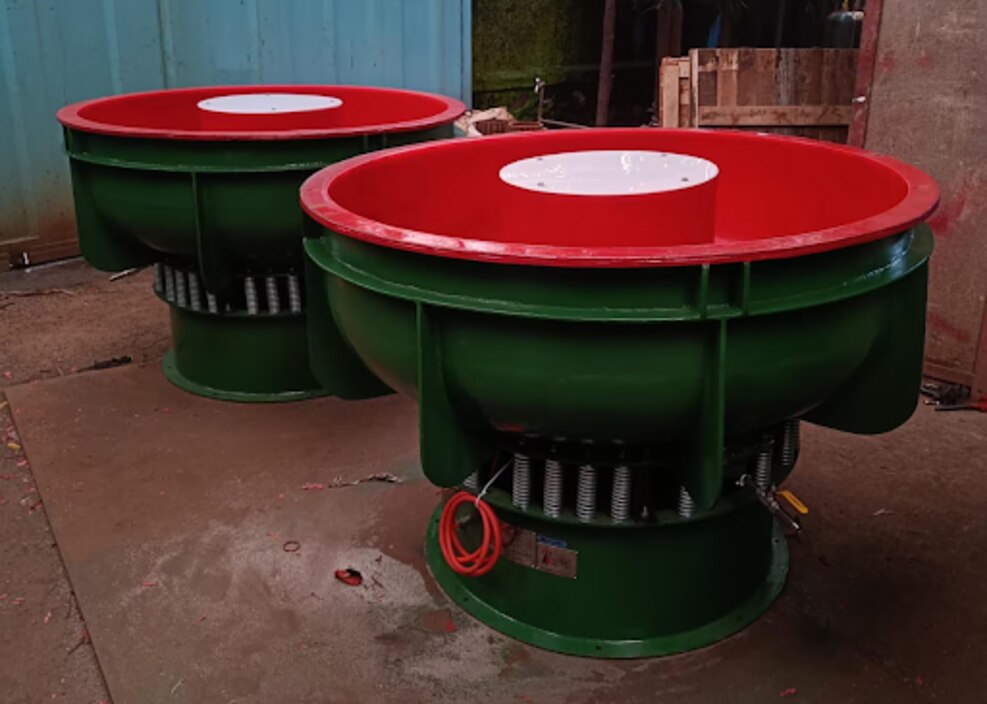
A tumbler finishing cycle can remove burrs, soften stamped edges, clean oxidation, and improve the appearance of robust metal batches, but the wrong media, load, or cycle can trap abrasive, damage threads, or alter dimensions. By the end, you will be able to match rotary tumbling with the part, define a testable finish requirement, and decide when vibratory or another finishing process is safer.
Key takeaways
- Use wet cycles for deburring, cleaning, and controlled surface refinement.
- Compare rotary tumbling with vibratory finishing based on geometry and throughput.
- Match media shape, size, and hardness to the part material and features.
- Run trials before production and define measurable limits for burrs and surface finish.
How a rotary tumbling cycle changes a batch of metal parts
Load a tumbler finishing machine with parts, selected media, and enough free space for movement. Add water and compound for a wet cycle; dry tumbling uses media without liquid. As the barrel rotates, the load lifts, cascades, and slides, rubbing burrs, scale, oxidation, and rough edges from the parts.
The gentler action reduces impact but usually takes longer than vibratory finishing.
| Method | Part movement | Typical result |
|---|---|---|
| Rotary barrel tumbling | Parts and media rise with the rotating barrel, then cascade | Gentle deburring, edge radiusing, burnishing, and longer batch cycles |
| Vibratory finishing | A chamber oscillates at high frequency, causing rapid rubbing and impact | Faster finishing, stronger surface action, and greater risk of contact marks |
The cycle addresses deburring castings and machined parts, removing flash from zinc and aluminium die-castings, radiusing stamped edges, descaling forged components, polishing brass fittings, and cleaning oxidised steel surfaces.
After wet processing, separate the media, rinse or neutralise the parts when the compound requires it, and dry them promptly; carbon-steel parts can develop flash rust from trapped moisture. Inspect representative pieces for remaining burrs, edge radius, stains, media lodged in holes or threads, contact marks, and dimensional change.
Rotary tumbling is the wrong choice when a part must retain a sharp functional edge, a tight as-machined dimension, or an unmarked pristine face.
Rotary tumbling, vibratory finishing, and other process options
Choose a rotating barrel for robust parts needing gentle, economical batch finishing; choose faster, more aggressive equipment when cycle time or difficult burrs matters more than contact control.
| Option | What it does | Choose it when |
|---|---|---|
| Rotating barrel | Parts and media cascade through a rotating chamber | You need gentle deburring, edge radiusing, burnishing, or descaling on durable parts |
| Vibratory tub | High-frequency oscillation creates continuous rubbing | You need shorter cycles, higher throughput, or more consistent contact on complex shapes |
| Centrifugal disc finishing | A spinning disc generates high relative force | You need rapid deburring and polishing on small, tough parts in controlled batches |
| Manual filing and polishing | An operator works each edge or surface individually | You have prototypes, repairs, very small batches, or features that mass finishing could damage |
| Blasting | Abrasive particles strike exposed surfaces | You need scale, paint, oxide, or surface texture removal rather than rounded edges |
| Wheel-based methods | A powered wheel applies abrasive or polishing action | You need a targeted finish on accessible faces, welds, or visible surfaces |
Rotary versus vibratory finishing comes down to impact, time, and geometry. A rotary barrel reduces part-on-part shock but usually takes longer; a vibratory tub finishes faster while increasing the risk of marks on thin sections, sharp corners, and fragile surfaces.
Use centrifugal disc finishing for compact batches, not long or delicate parts that can bridge or collide. Use blasting for exposed surfaces, not blind holes or precise edges.
Before choosing, confirm these points:
- Required cycle time and batch size
- Acceptable part-on-part contact
- Burr location and material hardness
- Access to holes, threads, and recesses
- Whether the finish requires dimensional control or cosmetic uniformity
Matching media and machine action to part material and geometry
Choose media by the damage you can tolerate, not only by the burr you need to remove. Ceramic media cuts aggressively; plastic media cushions contact and removes lighter burrs. A rotary barrel gives parts a rolling, sliding action, while a tightly packed load reduces impact between individual parts.
| Part or feature | Media | Motion and loading choice |
|---|---|---|
| Aluminium, zinc, or brass | Plastic media | Use a gentle wet cycle and a high media-to-part ratio. Avoid hard impacts that smear soft surfaces or round functional edges. |
| Steel or stainless steel with heavy burrs | Ceramic media | Use a stronger rolling action and enough free space for media circulation. Inspect threads and sharp corners because ceramic can enlarge edges and alter small features. |
| Steel parts needing burnishing or brightening | Steel media | Use steel media for pressure and surface densification, not major burr removal. Keep the load balanced to prevent uneven contact marks. |
| Thin sections or fragile castings | Plastic media | Reduce drop height and fill the barrel consistently. Separate small parts before they nest and strike one another. |
| Holes, blind recesses, slots, or threads | Media sized below the opening | Test retention after separation. A media piece that passes the outside profile can still lodge inside a feature. |
| Dry polishing after wet finishing | Corn cob and walnut shell media | Use dry rotary action for drying, light cleaning, or polishing; organic media does not replace deburring. |
Overfilling suppresses movement and causes smearing; underfilling increases impact damage. Tumbler finishing is the wrong choice when sharp edges, exact machined dimensions, controlled radii, or mark-free faces must remain unchanged. Dry carbon-steel parts immediately after wet processing to prevent flash rust.
Building a trial recipe and defining an acceptable finish
Use production parts, not samples with unusually light burrs. Include the alloy, heat treatment, geometry, holes, threads, and worst-case casting or machining condition expected in the batch; run enough pieces to show part-to-part contact and media access.
Record the recipe as a controlled test, not as the machine’s rated capacity:
- Barrel speed, machine fill level, part-to-media ratio, media size and shape
- Water volume, compound concentration, cycle time, and drying temperature
- Part loading order, separation method, rinse time, and media recovery
Change one setting at a time. A fuller barrel can reduce cutting action, while too little load increases impact damage. Measure compound concentration with a refractometer and record the actual barrel speed rather than relying on the control setting.
Define pass and fail limits before the trial:
- Deburring: maximum burr height and 100% removal at specified edges
- Edge radiusing: radius measured with a radius gauge or microscope
- Descaling: no specified oxide, scale, or rust remaining
- Burnishing and polishing: surface roughness using a profilometer, plus approved visual samples
- Cleaning: no compound film, chips, oil, or retained media in holes and threads
- Dimensions: critical features checked with gauges, micrometers, or a coordinate-measuring machine
Inspect for dents, part-on-part marks, staining, and flash rust after drying. A bright surface does not prove cleanliness or dimensional compliance; compare pre- and post-cycle measurements and retain photographs and sample parts as the approved finish standard.
Controlling production risks, operating costs, and equipment fit
One lodged media piece can scrap an entire batch if a blind hole, slot, or internal channel is not checked after separation. Include representative small parts in the trial, inspect recessed features, and choose media smaller than the opening only when it will not lodge; otherwise use a different shape or a post-process extraction step.
Treat rated capacity as a loading limit, not a recipe. Record barrel speed, fill level, part-to-media ratio, media size, compound concentration, water flow, cycle time, and drying conditions. Change one variable at a time, or repeatability failures will be impossible to diagnose.
- Use dedicated media and clean-down procedures for aluminium, zinc, steel, stainless steel, and copper alloys. This limits cross-contamination and staining from fines or residues.
- Specify media separation and drying as part of the machine layout. Rinse or neutralise where the chemistry requires it, then dry carbon-steel parts immediately for flash rust prevention.
- Require guarded covers, interlocks, safe loading height, and a controlled unloading method. Manual lifting and exposed rotating parts create avoidable handling injuries.
- Plan wastewater handling before installation. Tumbling effluent can contain metal fines, abrasive particles, oils, surfactants, and chemicals; settling, filtration, pH control, or oil separation may be needed before discharge under the local permit.
When comparing suppliers, ask Separation Engineers (India) to document the usable load range, separation method, rinse and dryer arrangement, clean-out access, and controls for storing repeatable recipes. A machine that fits the floor but cannot control these steps is not production-ready.
Related products
 | Vibratory Finishing Machines The Tumbler Finishing Machine by Separation Engineers India is designed to provide precise and efficient surface finishing for components processed... View product → |
Vibratory Finishing Machines The Industrial Tumbling Machine by Separation Engineers India is a high-performance solution designed for efficient vibratory finishing, deburring,... View product → |
Frequently asked questions
How does a rotary tumbling cycle change metal parts?
The rotating barrel lifts, cascades, and slides parts through the media, removing burrs, scale, oxidation, and rough edges. Wet cycles add water and compound; dry cycles use media without liquid.
How does rotary tumbling compare with vibratory finishing?
Rotary tumbling suits batch processing that needs strong cascading action, while vibratory finishing offers more frequent part-to-media contact and can better suit delicate features or higher-throughput continuous work.
How do you choose finishing media for a metal part?
Match media material, shape, size, and hardness to the part material, geometry, burr size, and target finish. Smaller media reaches narrow features, while larger media provides stronger contact on open surfaces.
What belongs in a tumbler finishing trial recipe?
Record the machine load, part-to-media ratio, water and compound levels, cycle time, rotation speed, and media specification. Define acceptance limits for burrs, stains, dimensional change, surface roughness, and media lodging.