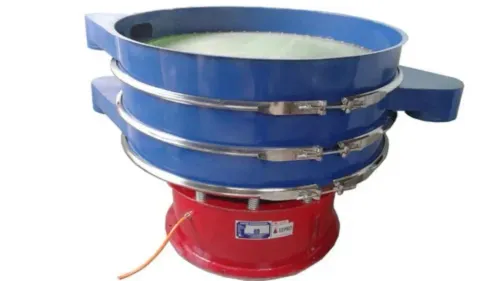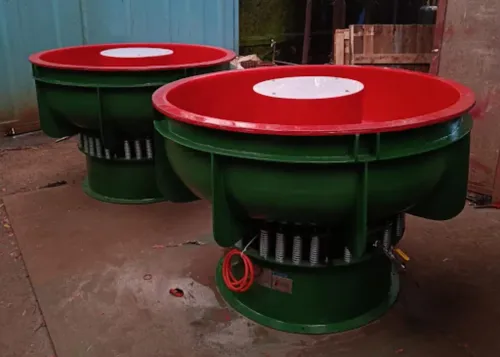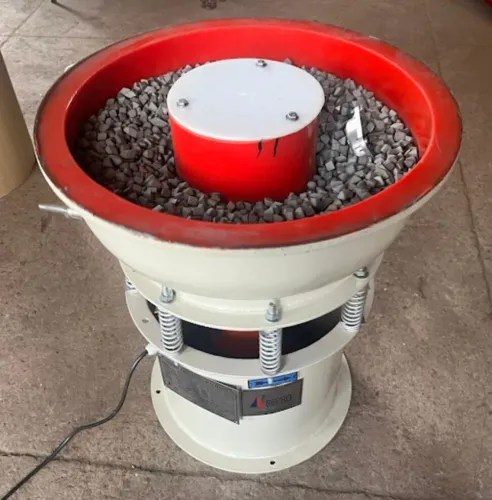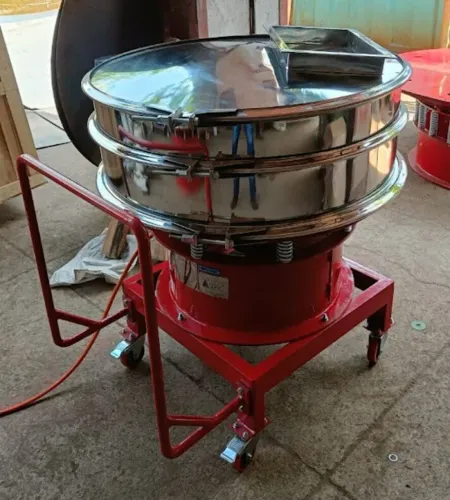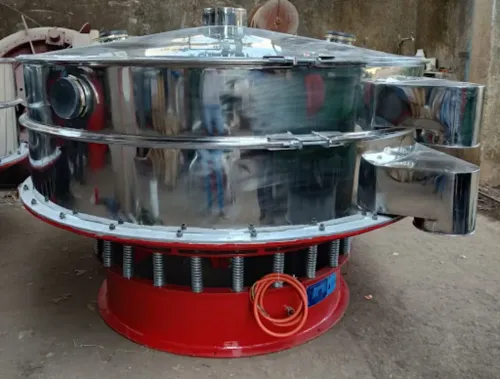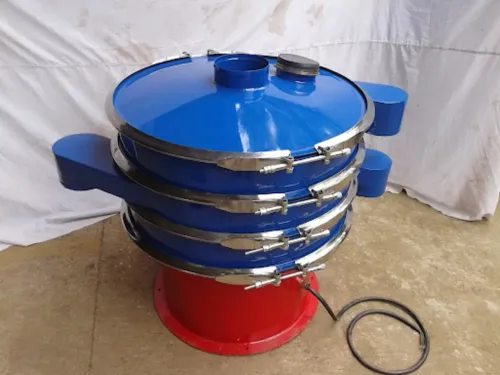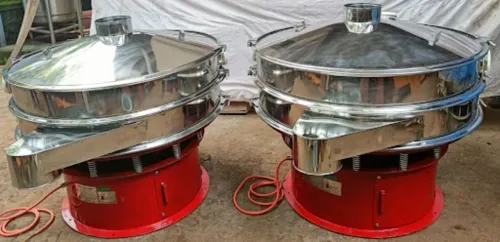
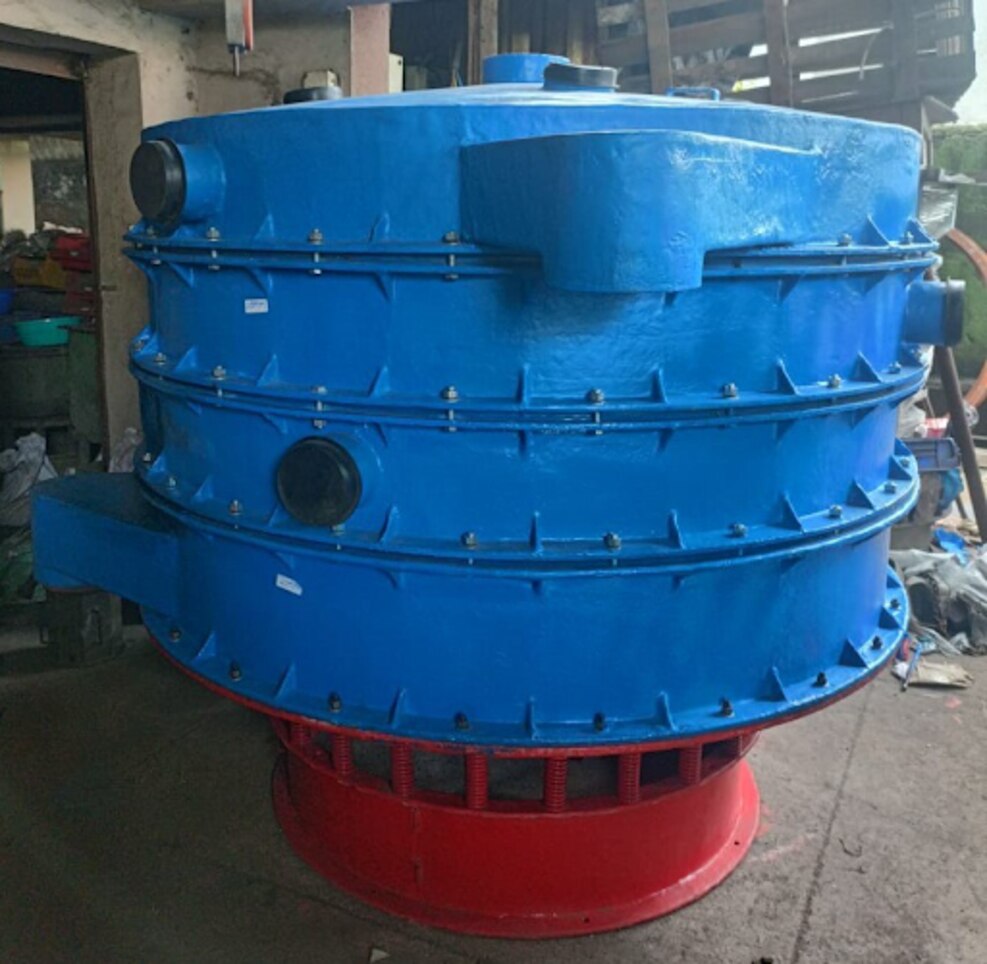
Anhydrous aluminum chloride can absorb moisture, form corrosive fumes, cake on the screen, and generate hazardous dust before separation is complete. By the end, you will know how to design the handling path, choose the screen opening, compare screening methods, and define a trial that proves capacity and product recovery.
Key takeaways
- Seal the feed path against humid air and water leaks.
- Use corrosion-resistant, grounded equipment with controlled dust extraction.
- Match aperture size to the required cut point and particle condition.
- Test blinding, fines generation, throughput, and moisture exposure before purchase.
Why Anhydrous Aluminum Chloride Is Difficult to Screen Reliably
Anhydrous aluminum chloride does not behave like an inert, free-flowing powder. It is highly moisture-sensitive: humid air or a water leak can hydrolyze particles, generate hydrogen chloride fumes, and turn a mobile feed into sticky caking. That change affects flow, aperture loading, particle-size distribution, and dust-extraction pressure.
1. Treat oversize as a diagnosis, not proof of genuinely coarse particles. Agglomerated material can be rejected by the mesh, but screening alone will not reliably return it to grade. Use a preceding dry lump breaker or mill; replacing that step with excessive vibration increases fines generation and screen wear.
2. Account for dust generation during feeding, separation, and discharge. Anhydrous aluminum chloride is corrosive and non-combustible as a chemical substance, so do not assume a combustible-dust design is automatically required. Review dust release, static, ignition sources, and cross-contamination if the collection system also serves organic or combustible powders.
3. Test the powder at its expected moisture condition and residence time. A freshly prepared laboratory sample can screen cleanly while production material cakes during a longer feed period.
4. Check every wetted or exposed component against the excursion condition. Chloride, humidity, temperature, and cleaning exposure can make a screen frame, mesh, clamp, seal, or duct unsuitable even when its dry-service material appears compatible.
Keep the feed and discharge closed, and use dry conveying air or a controlled dry-inert purge. An open vibrating deck exposes the powder to humid air and can turn a separation problem into hydrolysis, corrosion, and contaminated product.
How to Keep Moisture and Corrosive Dust Out of the Screening Path
Keep the entire path closed from receipt to discharge: moisture entering through one loose cover can hydrolyze the powder, release hydrogen chloride fumes, and create sticky deposits that blind the screen.
1. Receive each container sealed and inspect the liner, closure, batch label, and visible damage before opening it. Store it in a dry area, then connect the container to a closed transfer point rather than tipping it into an open hopper.
2. Keep the feed hopper, conveyor, screen cover, and discharge receiver gasketed. Use dry air or a controlled dry-inert purge to prevent humid room air from reaching the powder, and fit desiccant protection to receivers or vents that remain connected during pauses.
3. Balance dust extraction at the feed, screen enclosure, and discharge. Maintain slight negative pressure so corrosive dust moves into the collector, but do not extract so aggressively that humid air is pulled through gaps and across the product.
4. Transfer both accepted powder and oversize into sealed containers before breaking the connection. Close the discharge valve or clamp before removing a receiver; an open outlet can release dust and expose the product to moisture within seconds.
5. Clean the enclosure with a vacuum rated for corrosive chemical dust or use a validated dry-change procedure. Do not use routine water-based washdown: residual water can start hydrolysis and generate hydrogen chloride.
Inspect screens, gaskets, and collection hoses for caked or hydrolyzed material before the next batch. Treat any wet deposit as contaminated waste, not as recoverable product.
Selecting the Aperture Without Creating Blinding or Excessive Fines
Set the screen aperture from the required product cut and the measured particle-size distribution, not from a grade name alone. Compare the target limits with a sieve analysis of representative feed, then specify the wire-cloth aperture, wire diameter, and tolerance. Reference ASTM E11 or ISO 3310-1 so the stated opening has a recognised basis.
| Choice | Use | Main control |
|---|---|---|
| Fine aperture below the upper product limit | Remove near-size and coarse particles | Keep the feed layer thin; overfeeding carries undersize into the oversize stream |
| Perforated plate | Handle genuinely coarse crystals or a heavy oversize load | Check that the cut is sharp enough for the required grade |
| Cloth with bouncing balls or sliders | Reduce blinding from soft agglomerates | Confirm the device does not abrade the cloth or create fines |
| Ultrasonic assistance | Address persistent fine-powder blinding | Test for product damage, contamination, and unacceptable fines before adoption |
Treat an oversized piece differently according to its cause. A hard, genuinely coarse crystal belongs in the oversize stream; a soft agglomerate needs a dry lump breaker or mill before screening. Do not increase vibration to force it through: that approach raises fines and screen wear without reliably restoring specification.
Verify the cut at steady state by sampling both streams. Record sieve analysis, mass balance, product recovery, dust loss, and hydrolyzed or caked particles; throughput alone can conceal misplaced near-size material.
How Machine Settings and Screening Methods Change Separation Results
A high feed rate loads the deck faster than particles can stratify, increasing undersize carryover into the oversize stream and reducing separation accuracy. A controlled feed keeps the bed shallow, limits dust release, and gives near-size particles time to pass.
- Feed rate: Increase it only until the undersize purity or recovery begins to fall. Overfeeding causes blinding, carryover, and uneven residence time across the screen.
- Inclination: A steeper deck raises throughput but shortens residence time, so more acceptable crystals leave with oversize. A flatter deck improves separation while increasing hold-up and caking risk.
- Speed: Higher frequency moves material faster and can improve throughput, but it reduces residence time and raises dust if the enclosure or extraction is inadequate.
- Amplitude: More throw helps clear apertures and break a shallow bed, yet excessive amplitude creates crystal impact, fines, screen wear, and dust.
- Residence time: Adjust it through feed rate, deck angle, and motion rather than relying on vibration alone to force agglomerates through.
Vibrating screening suits controlled size classification when gentle acceleration and a sealed deck are required. Rotary screening can provide longer contact with the screen and lower impact, but sticky hydrolyzed particles can build on the cylindrical surface. Centrifugal screening delivers high centrifugal force and compact equipment, though it can increase fines and crystal damage.
Air classification separates particles by aerodynamic behaviour, not simply aperture size; use it when density or settling response matters. Balance negative-pressure extraction so it captures dust without drawing humid room air through the product zone.
What to Specify and Test Before Choosing a Screening Machine
A quotation is only as useful as the production envelope you provide. Give Separation Engineers (India) the same feed and operating limits you expect on the plant floor, not a clean laboratory sample.
- Feed rate and required capacity in kilograms per hour
- Particle-size distribution, target cut size, aperture, wire diameter, and allowable tolerance to ASTM E11 or ISO 3310-1
- Bulk density, moisture content, temperature, residence time, and expected batch variation
- Maximum oversize percentage and whether oversize means genuine crystals or soft agglomerates
- Required product recovery, acceptable fines generation, and dust-loss limit
- Enclosure, dry-air or desiccant protection, extraction, and sealed discharge requirements
Require a screening trial at steady state with production-condition material. Sample both streams; a single throughput figure can hide near-size particles carried into oversize.
| Test | How to verify | Evidence to request |
|---|---|---|
| Sieve separation | Analyse representative undersize and oversize samples | Size distribution against the agreed cut |
| Mass balance | Weigh feed, accepted product, oversize, and collected dust | Accounted mass within the agreed tolerance |
| Product recovery | Compare accepted product mass with feed mass | Reported recovery percentage |
| Oversize control | Calculate oversize percentage in the accepted stream | Result below the specified limit |
| Moisture damage | Inspect both streams after the planned residence time | No hydrolyzed, sticky, or caked particles beyond the agreed limit |
| Blinding and wear | Run the trial for the intended duration | Stable capacity, intact cloth, and no excessive fines |
Reject a quotation based only on nominal deck area or motor speed; overfeeding can push near-size powder over the outlet as oversize.
Related product
 | Anhydrous Aluminum Chloride Screening Machine Anhydrous Aluminum Chloride Screening Machine The Rotary Screening Machine by Separation Engineers India is a high-performance equipment designed for efficient separation and grading of materials... View product → |
Frequently asked questions
Why is anhydrous aluminum chloride difficult to screen reliably?
It reacts with moisture, producing hydrogen chloride fumes and sticky caking that changes flow, aperture loading, and particle-size distribution.
How do you keep moisture and corrosive dust out of the screening path?
Use enclosed conveying and screening, dry air management, sealed inspection points, compatible construction materials, grounding, and dust extraction designed for corrosive powder.
How should you select the aperture for anhydrous aluminum chloride?
Choose the aperture from the required separation cut point, then test the actual powder because caking, particle shape, and moisture exposure affect blinding and fines.
Which machine settings change screening results?
Feed rate, vibration amplitude, frequency, deck angle, residence time, and the chosen screening method all affect throughput, oversize carryover, and fines generation.
What should you test before choosing a screening machine?
Test representative material for throughput, separation accuracy, blinding, dust containment, corrosion compatibility, cleaning access, and performance after controlled moisture exposure.