Rava production depends heavily on particle-size consistency. When coarse and fine fractions are mixed unpredictably, the product may behave differently during cooking, food manufacturing, packing, and quality inspection.
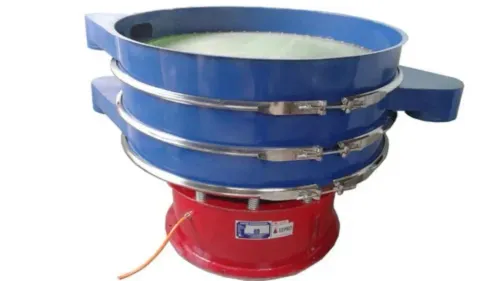
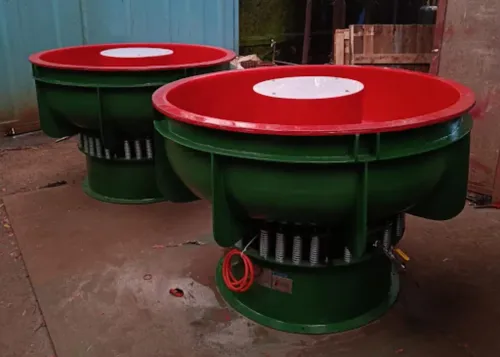
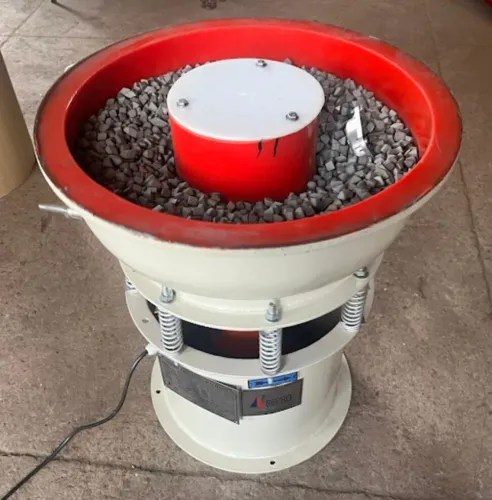
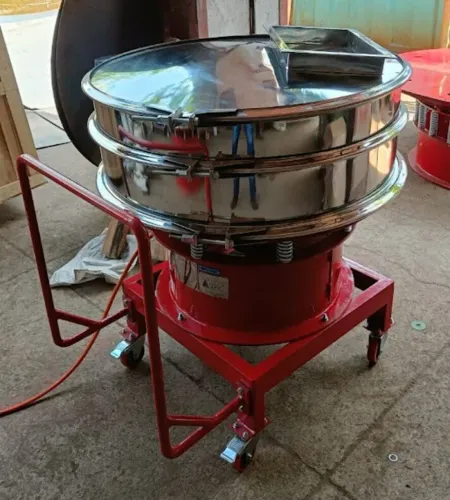
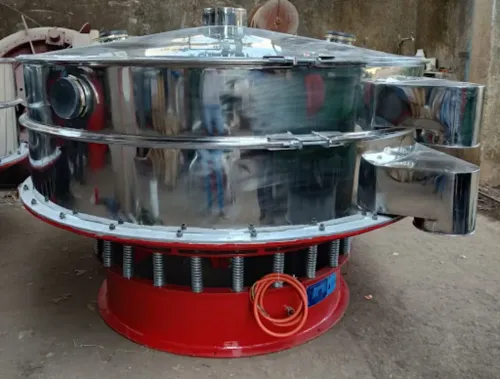
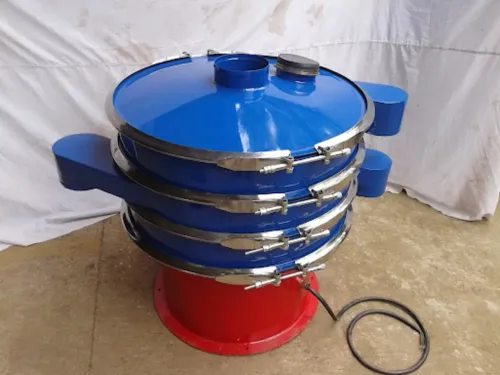
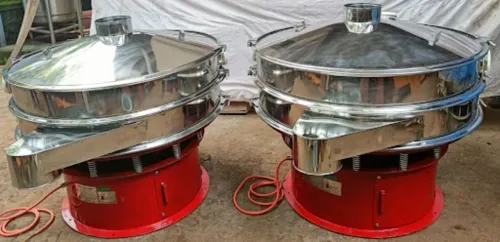
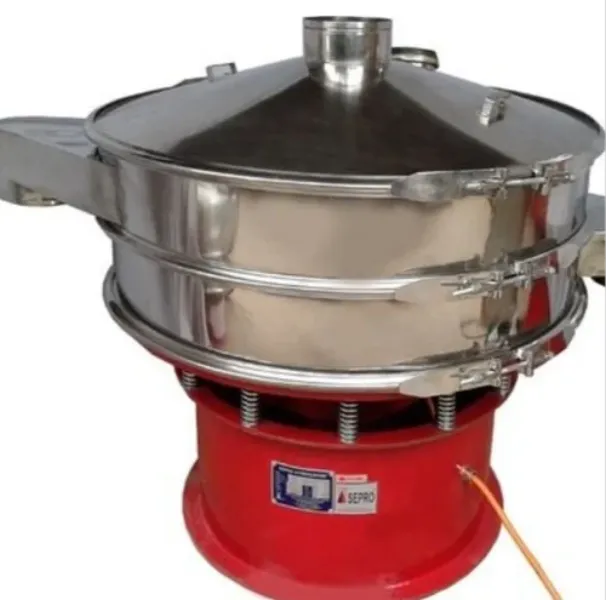
A Rava Screening Machine is designed to classify material according to selected particle sizes. Rather than relying on visual inspection alone, screening gives processors a repeatable physical separation stage that can be incorporated into routine production.
Food manufacturers and grain-processing businesses in Navi Mumbai, Maharashtra, can use this approach when product grading needs to remain consistent across multiple batches.
How a Rava Screening Machine Separates Material
The principle is straightforward. Rava is fed onto a screening surface, and particles interact with openings of a defined size.
Material small enough to pass through moves to the appropriate outlet, while larger particles remain above the screen. Multi-deck arrangements may be used when the process needs more than one size fraction.
Effective classification depends on more than the screen opening alone.
Feed rate, particle distribution, moisture, screen loading, vibration characteristics, and equipment configuration can all influence the final result.
Consistency Matters Beyond Appearance
Uniform rava is not simply a visual quality preference.
Particle size can influence hydration, cooking behaviour, mixing performance, product texture, and portion consistency. Food manufacturers using rava as an ingredient may therefore establish specific particle requirements for their processes.
When incoming material varies substantially, downstream teams may need to compensate through recipe adjustments or additional processing.
Screening helps control this variability earlier in the production sequence.
Feed Control Can Improve Screening
A common misconception is that increasing the amount of material fed to a screen always increases productive output.
Excessive loading can limit the opportunity for particles to reach the screening surface. This may reduce separation effectiveness and create unnecessary pressure on the equipment.
A controlled, even feed generally gives the screening process a better opportunity to classify material consistently.
Operators should monitor both throughput and finished-product quality instead of focusing on production rate alone.
Screen Condition Should Be Checked Routinely
Damaged mesh can compromise particle classification. Blocked openings can reduce available screening area.
Regular inspection can identify:
- Mesh damage
- Product accumulation
- Loose screen components
- Uneven material distribution
- Unexpected changes in vibration
- Abnormal product retention
Maintenance schedules should reflect actual production intensity and product behaviour.
Matching Screening to the Required Grade
Before evaluating equipment, processors should clearly define what they expect from the screening stage.
Questions worth answering include:
- What particle-size range is required?
- Is one separation sufficient?
- Are multiple grades needed?
- What production capacity is expected?
- Does the product arrive dry and free flowing?
- How frequently will the equipment be cleaned?
- What happens to oversized material?
These answers help transform a broad machine enquiry into a specific process requirement.
For food-processing units in Navi Mumbai and other manufacturing centres across Maharashtra, a suitable Rava Screening Machine can provide a controlled link between milling and finished-product preparation.
The strongest results come from treating screening as part of the complete production process. Material characteristics, feed conditions, required grades, hygiene practices, and downstream needs should all be considered together when establishing a reliable particle-classification system.
Keywords